Home › LED masks › Power & irradiance
The science · updated June 2026
LED mask power, explained: total output vs irradiance
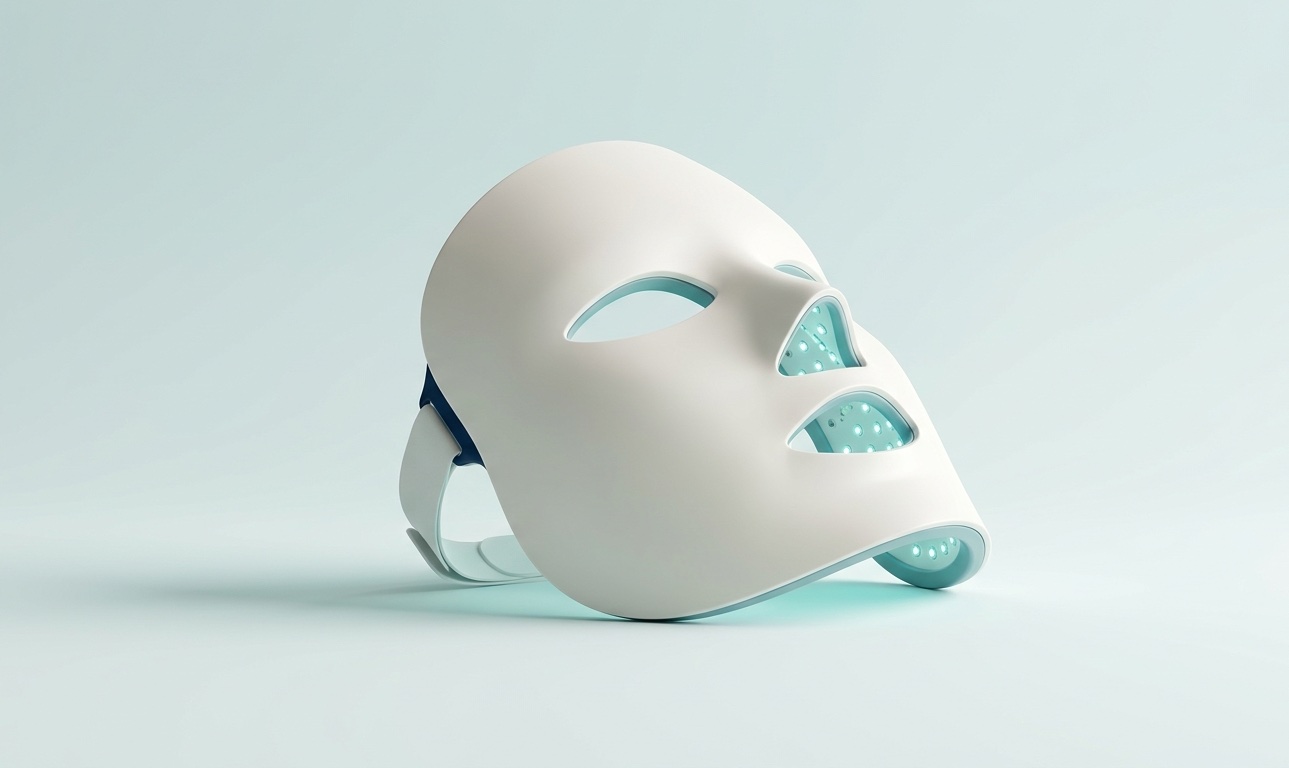
Power comes up in every LED-mask comparison — rightly so. But it's a slippery number: the same device can show very different figures depending on how it's measured. Not because one is wrong, but because they don't measure the same thing.
I've followed this market since the early days of ChokoMag — around fifteen years — and I'm regularly pitched white-label devices through Skin Cafeine, so I know the tricks. The science behind photobiomodulation is well established; what's new is the consumer boom, and standards for how brands talk about power haven't caught up. Marketing teams themselves often aren't across the nuances below. So rather than name names, here are the keys to judge any mask yourself.
Two words not to confuse
Total output is all the light a source emits in every direction — forward, sideways, backward. It describes the LED itself, but says nothing about how much reaches your face.
Irradiance is the light actually received per square centimetre of skin, in mW/cm². It answers the question that matters: how much light does my skin get, at the real use distance? Rule of thumb: if a spec lists a "total power" in watts without "per cm²", that figure alone doesn't tell you what your skin receives.
Two instruments, two philosophies
Brands don't all use the same tools to measure — which is exactly where the numbers diverge.
Instrument A: the integrating sphere
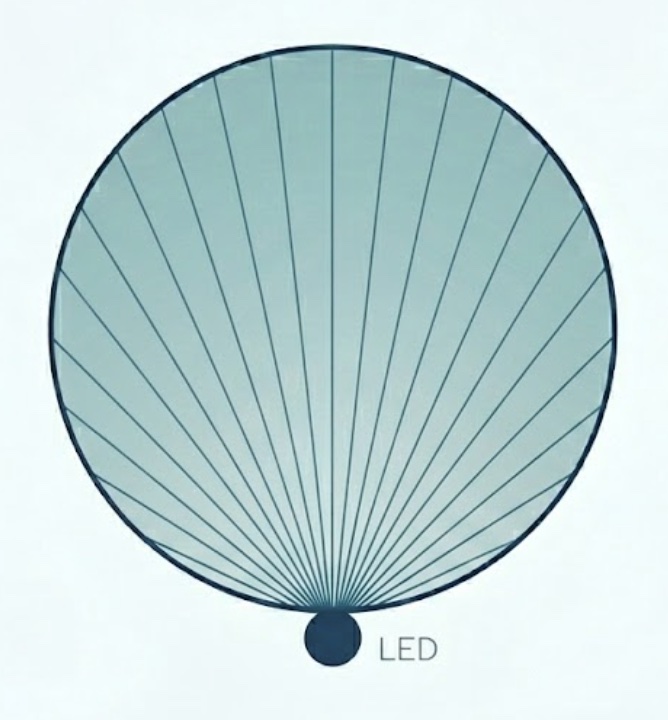
It captures all the energy a LED emits in every direction — like measuring a bulb's total wattage. Useful in product development, but it ignores what happens in real use: the light thrown backward or sideways never touches your skin. A bulb can be powerful and still light a room poorly if it's hung too far away.
Instrument B: the surface power meter
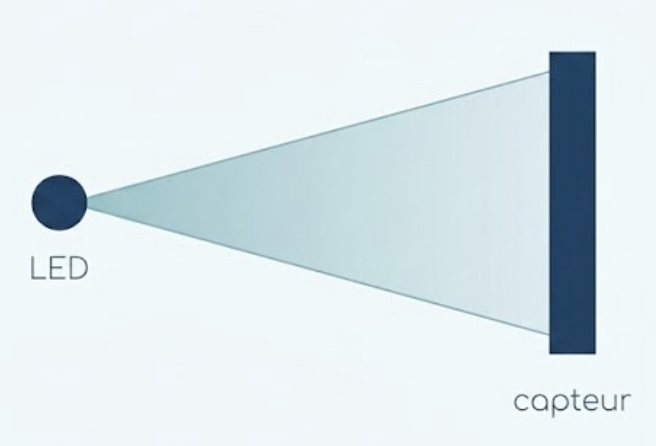
This has a fixed-size sensor (say 1 cm²) that measures only the light hitting that small area — the irradiance, right where you place it. That's exactly what a mask user cares about: how much light my skin receives where the mask sits.
Neither tool is "better"; they answer different questions. The problem is using one to answer the other's question — quoting an integrating-sphere figure to suggest what the skin receives gives an incomplete picture.
Why distance changes everything
A LED's light diverges as it travels: the further from the source, the more it spreads and the lower the irradiance. The same LED might read 60 mW/cm² at contact but only ~15 mW/cm² at 5 cm — four times less, same device. Hence the golden rule:
Measuring a contact mask from 5 cm gives an artificially low number that matches no real situation; measuring a distance device at contact does the reverse.
How to read a spec sheet
Four questions cut through the noise:
| Ask | Why it matters |
|---|---|
| Which figure is it? | A "total power" in watts isn't comparable to an irradiance in mW/cm². |
| At what distance? | A contact mask should be measured at contact; a hand-held device at its real distance. |
| Per wavelength? | Masks mix LEDs (e.g. red 633 nm + near-infrared 830 nm). A single "global" figure hides how power is split between them. |
| Through the silicone? | For soft "second-skin" masks the light passes through medical silicone — measure through it, as in real use. |
What to actually compare
In the jungle of numbers, compare the irradiance in mW/cm², taken with a surface power meter, at the real use distance, ideally broken down by wavelength. It's the metric that best predicts how skin responds, according to the photobiomodulation literature. But more isn't always better: there's a sweet spot, beyond which the benefit plateaus then declines. The most relevant figure isn't the highest — it's the one matching the device's recommended, clinically tested conditions. (Density of LEDs is a separate question, covered in do more LEDs make a better mask?)
FAQ
What is irradiance on an LED mask?
Irradiance is the light actually reaching one square centimetre of skin, measured in mW/cm². It's the number that answers the real question — how much light does my skin receive? — far more usefully than a total wattage figure.
Why do brands quote such different power numbers?
Because they don't all measure the same thing. Total output (all light emitted in every direction) and irradiance (light hitting your skin) are different, and measurement distance changes the result dramatically for the same device.
What's a good mW/cm² for an LED face mask?
There isn't a single 'higher is better' answer — there's an effective range, and beyond it benefits plateau then fall. The most relevant figure is the irradiance at the distance the device is actually used, ideally as it was tested clinically.