Home › LED masks › Dermalux Flex MD review
Review · updated June 2026
Dermalux Flex MD review: a pro panel, but still worth it?
This article uses an affiliate discount code (CHOKO15) for Nooance — we may earn a commission if you use it; the CurrentBody link is a plain link (I'm not affiliated with CurrentBody). Tested first-hand. See our editorial standards.
The Dermalux Flex MD is a professional LED panel you can use at home — powerful and versatile, but at a price that asks a real question. Here's my honest, hands-on take.
Up front, an honest edit: home LED has moved fast, and I now find the Dermalux Flex MD genuinely outdated — on both looks and technology — next to the Nooance Flexidome, a no-contact panel that does the same face-and-body job in a sleeker, more modern package. That doesn't make the Dermalux bad; it changes who it's for. (I cover the Flexidome and the rest of the range in which Nooance LED mask should you buy?)
Not just another face mask
The Flex MD is a professional device that consumers can also buy — which is why it sits around €2,235 in Europe (a four-figure investment; check current US pricing). What sets it apart from a face mask:
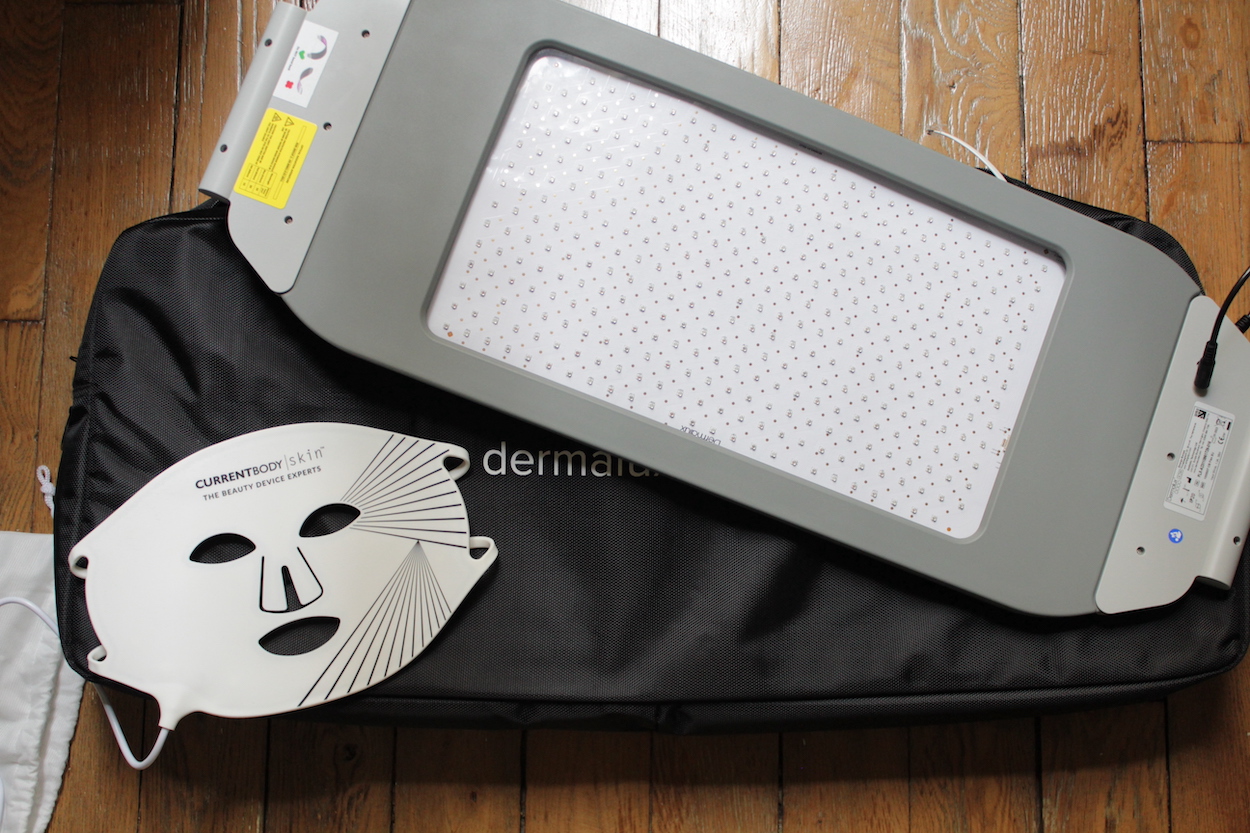
You can switch individual colours on or off; it carries 360 LEDs in total (120 red, 120 blue, 120 near-infrared) — for context, the largest Nooance face mask uses 99 red and 99 near-infrared; sessions run a full 30 minutes; it's mains-powered (no battery to charge); and the large flexible panel can sit over the face on its stand or lie flat on the body.
The three-colour line-up
Red and near-infrared are the versatile, best-documented wavelengths — supporting collagen and elastin, calming redness and aiding skin's own recovery (CurrentBody cites studies showing a ~35% reduction in wrinkles over four weeks). Blue targets the bacteria involved in inflammatory breakouts. As I always stress, wavelength precision matters — a few nanometres off and a device can underperform — and CurrentBody and Dermalux are among the brands I trust to get this right. (More on that in do LED masks actually work?)
How I actually use it
I reach for the Dermalux when I want a longer, more powerful, spa-style session, or to target the body — most days I mostly run red and near-infrared, with blue occasionally for a bacterial boost. I've personally found red/near-infrared light soothing on mild rosacea and helpful when my skin is irritated, and I use it on the body too. Two honest caveats: this is my personal experience, not a clinical promise, and a device like this does not replace medical care — for any skin condition, talk to a clinician or pharmacist; LED can be a complement, not a cure.
The Flex MD is sold by CurrentBody, which runs regular promotions through the year.
Prefer a sleeker, no-contact face-and-body panel? The Nooance Flexidome — 15% off with code
This is an affiliate code — we may earn a commission if you use it, at no extra cost to you.
Verdict
The Dermalux Flex MD is capable, versatile and from a brand that knows its light. But for most home users, a good face mask delivers the bulk of the benefit at a fraction of the cost — and for no-contact, face-and-body use the sleeker, more modern Nooance Flexidome has, to my eye, moved past it on both design and technology. The Dermalux still earns its place if you specifically want its format or you're a professional. If you mainly want results on the face for less, start with the best LED masks guide or the CurrentBody Skin mask.
FAQ
What is the Dermalux Flex MD?
A professional-grade LED panel (sold by CurrentBody) that's also available to home users. It has 360 LEDs — 120 red, 120 blue and 120 near-infrared — you can switch colours on or off, runs 30-minute mains-powered sessions, and works on the face or body.
Is the Dermalux worth it for home use?
For most people, a good face mask delivers the bulk of the benefit at a fraction of the price. The Dermalux makes sense if you want longer, body-capable, spa-style sessions or you're a professional — its main draw is versatility, not being the newest tech.
Can LED therapy replace medical treatment for skin conditions?
No. LED light can be a useful complement, but it isn't a substitute for medical care. If you have a skin condition, speak to a clinician or pharmacist before relying on it.